Wednesday, 12 August 2026

High-Performance Epoxy Coated Steel Pipes for Corrosive Environments

 At JS FITTINGS, we offer premium Epoxy Coated Pipes specifically engineered to withstand harsh environments. By applying a high-grade epoxy layer to the internal or external surface of our carbon steel pipes, we create a robust barrier against corrosion, chemical attacks, and abrasive flow. This extends the service life of your pipeline systems and significantly reduces maintenance costs.

Features & Benefits

  • Superior Corrosion Resistance: Prevents oxidation and rusting in aggressive soil or fluid environments.
  • Enhanced Flow Efficiency: The smooth internal epoxy coating reduces friction, increasing flow rates and lowering pumping power costs.
  • Chemical Compatibility: Resistant to a wide range of chemicals, hydrocarbons, and saline water.
  • Long-Lasting Durability: Minimizes the risk of leaks and structural degradation in critical infrastructure.
  • Certified Quality: Fully compliant with international standards such as AWWA C210, API RP 5L7, and ISO 21809.

Technical Specifications

Base Pipe MaterialCarbon Steel (API 5L, ASTM A53/A106/A252)
Coating TypeLiquid Epoxy, Fusion Bonded Epoxy (FBE)
Coating ApplicationInternal (for flow), External (for soil protection), or Both
Standard ComplianceAWWA C210, API RP 5L7, ISO 21809, DIN 30671
Size Range1/2″ to 48″ (DN15 – DN1200)
Wall ThicknessPer Client Specification / Schedule
Operating TempUp to 80°C – 100°C (depending on epoxy type)

Applications

  • Oil & Gas Industry: Sour service, crude oil transportation, and gathering lines.
  • Waterworks: Potable water systems and sewage treatment.
  • Chemical Processing: Transporting corrosive industrial liquids.
  • Marine & Offshore: Protection against high-salinity seawater exposure.

Why Partner with JS FITTINGS?

State-of-the-Art Coating Line: We operate an automated, temperature-controlled coating facility to ensure uniform thickness and perfect adhesion.

Rigorous Testing: We perform Holiday Detection (Porosity test), Adhesion Tests, and Thickness checks on 100% of our coated pipes.

Traceability: Full MTC (Mill Test Certificate) documentation provided for both the raw steel pipe and the coating material.

FAQ

Q: What is the difference between FBE and Liquid Epoxy?
A: FBE (Fusion Bonded Epoxy) is a powder-based coating applied via heat, known for extreme durability. Liquid Epoxy is applied as a liquid and is often preferred for internal lining to improve flow efficiency.

Q: Can you coat pipes I already have?
A: As a manufacturer, we primarily provide the “pipe + coating” solution. Please contact our team if you have specific volume requirements.

Q: How do you ensure the coating doesn’t peel?
A: We utilize specialized surface preparation (blasting to SA 2.5) to ensure optimal surface profile and adhesion strength.

Tuesday, 11 August 2026

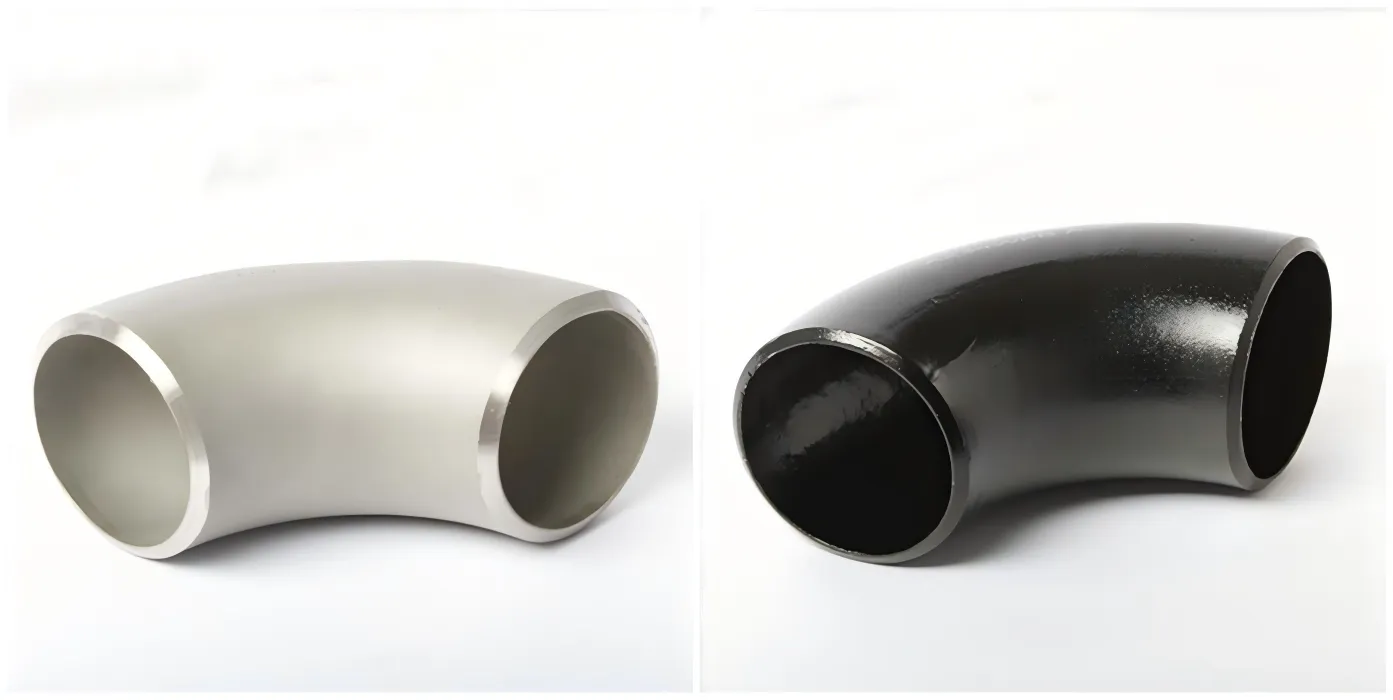
ASME B16.9 90° Buttweld Elbow

 Standard: ASME B16.9 buttweld elbows

Size Range: 1/2″ to 48″ (DN15 – DN1200)
Wall Thickness: SCH 10S to XXS
Material Grades: Carbon Steel (A234 WPB), Stainless Steel (304/316L), Alloy Steel
Key Advantage: Full MTC 3.1 Traceability & Precision Bevel Ends
Certification: High-quality industrial standards, ideal for Oil & Gas/Petrochemical projects.
Available for global bulk supply & custom engineering.

90° buttweld elbows are engineered for maximum flow efficiency and structural integrity in demanding industrial piping systems. Designed to change the direction of fluid flow by 90 degrees, these fittings are essential components for oil & gas, petrochemical, and power generation infrastructure.

90° Buttweld Elbows Types

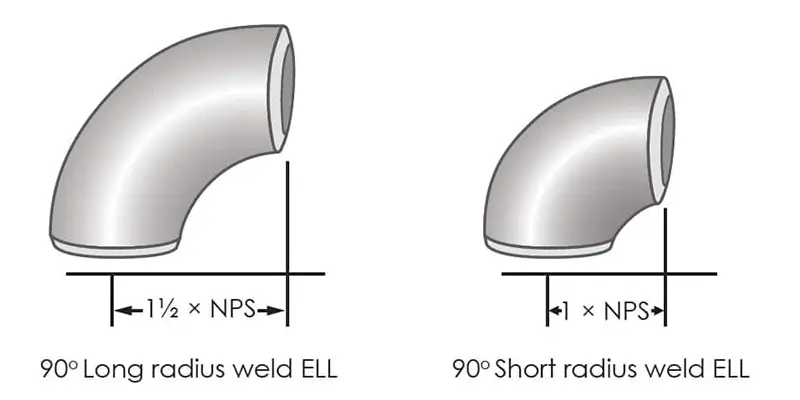
We offer both Long Radius (LR) and Short Radius (SR) 90° elbows. Choosing the right radius is crucial for your system’s flow dynamics and pressure drop—learn more about the difference between long radius and short radius elbows here.

90 degree Long Radius vs Short Radius Buttweld steel Elbow

Technical Specifications

ParameterDetails
StandardASME B16.9, MSS SP-75, DIN, EN 10253
Size Range1/2″ to 48″ (DN15 to DN1200)
Wall ThicknessSchedule 10S, 40, 80, 160, XXS (Custom thicknesses available)
RadiusLong Radius (LR) and Short Radius (SR) buttweld elbows
MaterialCarbon Steel: A234 WPB, A420 WPL6, A860 WPHY series
Stainless Steel: A403 WP304/304L, WP316/316L, WP321
Alloy Steel: Chrome-moly gradesKey Differences of Stainless Steel vs. Carbon Steel Elbows, please click here.
Surface TreatmentBlack painting, rust-proof oil, galvanized, sandblasting
Quality ControlUT, RT, MPI testing available upon request

90 degree buttweld elbow fittings

Comprehensive Product Range

While our 90° elbows are the cornerstone of many piping configurations, we also provide a full suite of directional fittings to complete your project requirements:

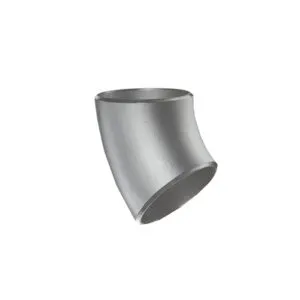
45° Buttweld steel Elbow
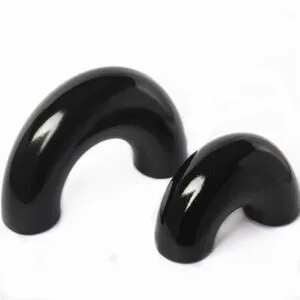
180° Buttweld steel Elbow

Why Rayoung?

As a specialized industrial buttweld pipe fitting manufacturer, Rayoung delivers more than just hardware; we provide project security.

Dimensional Accuracy:All bevel ends are machined to perfection to ensure smooth welding penetration.
Full Traceability:Every fitting is supplied with complete Material Test Certificates (MTC) per EN 10204 3.1.
Scalability:From small maintenance orders to large-scale bulk supply for global EPC projects.

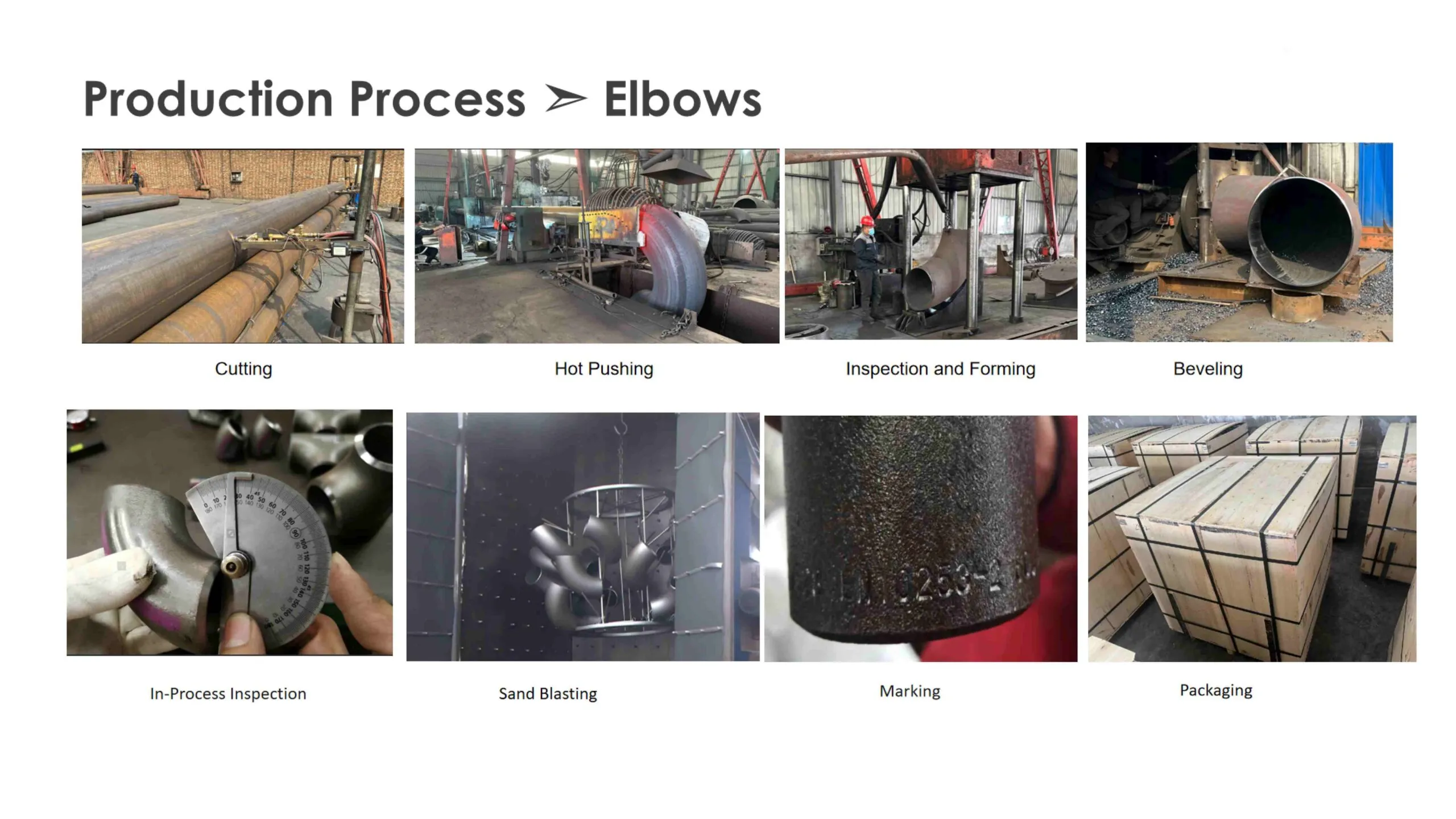
90 degree buttweld elbow producess manufacturer

Cooperate with Rayoung, you will enjoy the following benefits.

Rayoung–A leading Butt Weld pipe fittings, flanges and steel pipes supplier& factory in China.
We’re here to help with your industry pipe fittings and flange needs. Rayoung has been in the business of industrial pipe fittings since 1983, and we’re confident we can help you find a solution more quickly, affordably, and with greater expertise than the competition.

We’d love to learn more about your project today!

What is an SORF Flange and When Should You Use It?

 In the world of industrial piping, specifying the correct flange is not just a routine selection—it is a critical engineering decision that dictates the safety, integrity, and lifespan of your entire system. Among the various types used in oil, gas, and petrochemical projects, the SORF Flange stands out as a staple component.

Its Slip-On Raised Face flange application is primarily found in low-to-medium pressure pipelines where ease of installation and alignment are prioritized over extreme pressure resistance.

But what exactly is an SORF flange, and how does it compare to other common types?

What is an SORF Flange?

SORF stands for Slip-On Raised Face.

  • Slip-On: The flange is designed to slide over the end of the pipe. Once in place, it is fillet-welded both inside and outside to provide sufficient strength and prevent leakage.
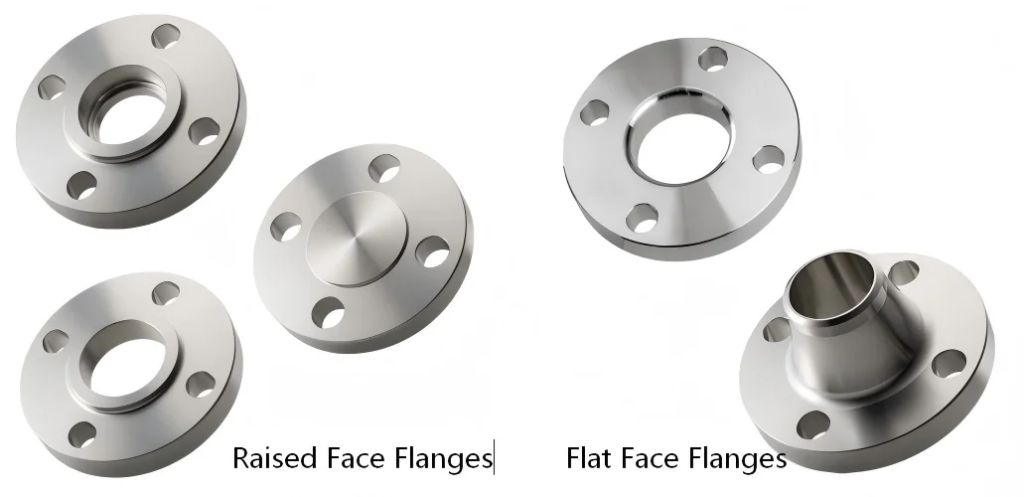
  • Raised Face (RF): This refers to the gasket surface, which is elevated above the bolting circle face. This design concentrates more pressure on a smaller gasket area, creating a tighter, more efficient seal.
Slip-On Raised Face flange

How Many Types of Flanges Are There?

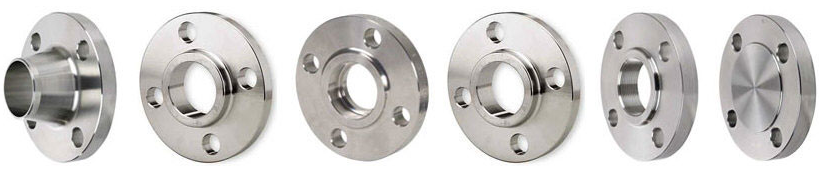
While the industry utilizes various custom configurations, the most common industrial flanges include:

  1. Weld Neck (WNRF): Distinguished by its long tapered hub, ideal for high-pressure and high-temperature services.
  2. Blind Flange: Used to seal the end of piping systems or pressure vessel openings.
  3. Socket Weld (SWRF): Primarily used for small-bore, high-pressure piping.
  4. Lap Joint: Used in systems that require frequent dismantling for cleaning or inspection.
  5. Threaded: Used where welding is not an option, typically in low-pressure utility lines.
  6. Slip-On (SORF): The versatile choice for lower-pressure applications where ease of installation is prioritized.
ASME B16.5 forged steel flange types

SORF Flanges: Advantages Over Other Types

Why do many project managers and procurement professionals prefer SORF flanges for specific applications?

  • Ease of Alignment: Because the pipe slides into the flange, it is easier to align and position the piping compared to a Weld Neck flange, which requires precise butt-welding.
  • Cost-Effectiveness: SORF flanges are generally less expensive to manufacture and easier to install, significantly reducing labor costs in non-critical piping runs.
  • Versatility: They are the go-to solution for general industrial piping, such as water systems, low-pressure oil lines, and petrochemical transport where extreme thermal shock is not the primary concern.

Why Partner with Rayoung for Your Flange Needs?

While the design of an SORF flange is standard, the metallurgical quality and dimensional accuracy are not. At Rayoung, we understand that a faulty flange can shut down an entire pipeline.

As a specialized manufacturer of industrial flanges and pipe fittings, Rayoung provides:

  • Precision Manufacturing: We adhere to ASME B16.5 and ASME B16.47 standards, ensuring every SORF flange we produce offers a perfect fit and reliable sealing performance.
  • Diverse Material Availability: From Carbon Steel (A105) to Stainless Steel (304/316) and low-temperature alloys, we stock and manufacture for various operational environments.
  • Project-Ready Logistics: Whether you are an international distributor looking for bulk inventory or an EPC contractor sourcing for a large-scale energy project, our manufacturing capacity is geared to meet your project timeline.
ASME B16.5 Slip-On Raised Face flange manufacture

Ready to Source Reliable Piping Components?

Selecting the right flange is the foundation of a leak-free system. Don’t leave your project integrity to chance.

Explore our complete range of Flanges here

Do you have a specific project requirement? Contact the Rayoung expert team today. Whether you need technical drawings, material certifications, or a competitive quote for your next tender, we are ready to assist.

Buttweld Fitting Rating vs. Thickness: A Complete Engineering Guide for Piping Projects

 In the demanding world of oil, gas, and petrochemical infrastructure, the integrity of a piping system relies on the precision of its components. As a procurement professional or project engineer, one of the most critical considerations is the relationship between buttweld fitting pressure ratings and wall thickness (Schedule). Choosing the wrong specification doesn’t just lead to budget overruns—it risks system failure.

At Rayoung, as a professional manufacturer specializing in high-quality buttweld fittings and flanges. This guide aims to clear the air.


Buttweld Fittings Pressure Rating vs. Wall Thickness

The pressure rating of a buttweld fitting (such as an elbow, tee, or reducer) is not an arbitrary number. It is intrinsically linked to the pipe schedule. Under ASME B16.9, the standard for factory-made wrought buttweld fittings, the fitting must be designed to withstand the same pressure as the matching straight seamless pipe.

Key takeaway: A fitting’s pressure rating is defined by the wall thickness (Schedule 40, 80, 160, etc.) and the material grade (ASTM A234 WPB, A420 WPL6, etc.).

Buttweld fittings do not carry independent pressure class ratings (like 150# or 300# flanges). Instead, their pressure rating matches the straight pipe of the corresponding nominal size and wall thickness schedule, meaning a fitting with a specific schedule thickness safely contains the exact same internal pressure as a pipe of that same schedule.

Rating and Thickness Principles

Equal Strength: A butt-weld fitting is designed to have equal or greater nominal thickness and strength than the matching pipe.
Schedule Matching: Ratings are designated by pipe schedules (such as SCH 10, SCH 40, SCH 80, and SCH 160) rather than pound classes.
Wall Thickness Rules: Thicker walls handle higher internal operating pressures and temperatures.
Design Standards: Governed by standards like ASME B16.9 for dimensions and ASME B31.3 for pressure design calculations.

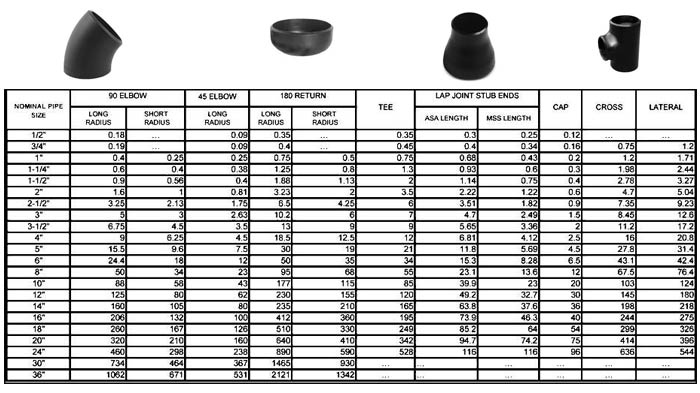
ASME B16.9 buttweld fitting weight chart by Rayoung

Why “Matching” Matters

When selecting buttweld fittings for high-pressure pipelines, the “matching principle” is the golden rule:

  1. Uniformity: The fitting’s wall thickness must match the pipe’s nominal wall thickness to ensure a consistent inner diameter (ID) and proper weld penetration.
  2. Pressure Integrity: If the fitting thickness is lower than the pipe schedule, the fitting becomes the weak point of the system.
  3. Hydrostatic Testing: All Rayoung fittings are manufactured to comply with strict testing protocols to ensure that, regardless of the schedule, the fitting maintains its pressure rating under extreme thermal and mechanical stress.

Critical Factors Influencing Your Choice

  • Operating Pressure & Temperature: Higher pressures require higher schedules (e.g., Sch 80 or 160).
  • Corrosion Allowance: For oil and gas applications, engineers often add “corrosion allowance” to the wall thickness, which may require jumping to a higher schedule than the base pressure rating suggests.
  • Material Grade Matters: A stainless steel fitting (e.g., ASTM A403 WP316) has different pressure-temperature ratings than a carbon steel fitting (e.g., A234 WPB), even if the wall thickness is the same.
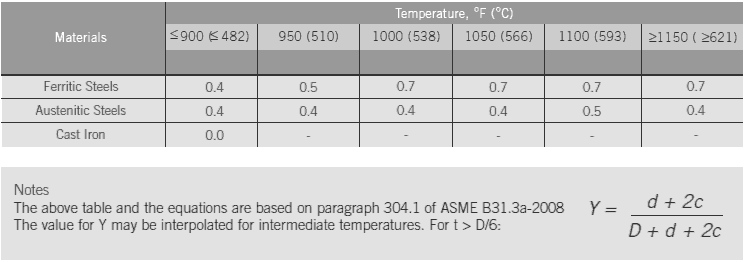
ASME B31.3 Y-factor reference table for wall thickness calculation

Why Experienced Buyers Choose Rayoung

At Rayoung, we don’t just supply fittings; we provide engineering solutions. We understand that for international projects, documentation is as important as the steel itself.

  • Manufacturing Precision: Our CNC machining and forging processes ensure every fitting meets exact wall thickness tolerances per ASME/ANSI standards.
  • Traceability: We offer full MTC (Material Test Certificates) according to EN 10204 3.1.
  • Scalability: From bulk inventory supply for distributors to custom-engineered runs for large-scale energy projects, Rayoung delivers consistency across every piece.
Rayoung ASME B16.9 buttweld fitting manufacturer

Need Expert Guidance for Your Project?

Selecting the right pressure rating and schedule is vital for safety and cost-efficiency. Are you currently sourcing for an upcoming pipeline project or stocking your inventory?

Click here to download our latest Buttweld Fitting Catalog

Contact the Rayoung Technical Team today. 

Send us your specification list, and let our experts provide a competitive quote and technical verification for your specific requirements.

Wednesday, 5 August 2026

Single Sphere Rubber Expansion Joint


Industrial Grade Single Sphere Rubber Expansion Joint: Reliable Vibration & Displacement Control

Rayoung’s single-sphere rubber expansion joints (also known as flexible rubber joints) are designed to provide a flexible connection between pipes. They effectively absorb noise and shocks, ensuring your industrial system runs smoothly and lasts longer.

Industrial Grade Single Sphere Rubber Expansion Joint: Reliable Vibration & Displacement Control
Rayoung’s single-sphere rubber expansion joints (also known as flexible rubber joints) are designed to provide a flexible connection between pipes. They effectively absorb noise and shocks, ensuring your industrial system runs smoothly and lasts longer.

Key Benefits:

  • Superior Vibration Absorption: Protects pumps and sensitive equipment from mechanical stress.
  • Excellent Displacement Compensation: Handles axial, lateral, and angular movements with ease.
  • Corrosion & Heat Resistance: Available in EPDM, NBR, or Neoprene to suit different fluids and temperatures.
  • Easy Installation: Features a rotating flange design that makes bolt hole alignment effortless.

Specification of RAYOUNG single sphere rubber expansion joint

Nominal Diameter(DN)Length LAxial displacementHorizontal DisplacementAngular deflection
mminchmmExtensionCompressionmm(a1+a2)
321¼9569915º
401½95610915º
5021057101015º
652½1157151115º
8031358191215º
100415010191315º
125516512201315º
150618012251415º
200821016252215º
2501023016252215º
3001224516252215º
3501425516252215º
4001625516252215º
4501825516252215º
5002025516252215º
6002426016252215º

Note:

  1. The material of flanges: galvanized carbon steel, stainless steel, alloy steel
  2. standard of the flanges: DIN, ANSI, ASME, JIS, BS, etc
  3. Size: DN32-DN 3000
  4. OEM: Please supply us with the drawing with data

Trust Factors:


As a professional manufacturer of flanges and pipe fittings, Rayoung understands that a small joint can affect an entire system.
Raw Material Control: We use high-purity rubber to prevent aging and cracking.
Pressure Testing: Every unit undergoes rigorous hydraulic testing before leaving the factory.
Custom Solutions: We can customize flange drillings and rubber compounds to meet your specific project requirements.

Applications


  • HVAC systems (Heating, Ventilation, and Air Conditioning)
  • Water treatment and desalination plants
  • Power generation and cooling water systems
  • Industrial chemical processing lines
  • Marine and shipbuilding industries

FAQ:

Q: What is the main purpose of a single sphere rubber expansion joint?
A: Its primary job is to reduce noise and vibration in piping systems while allowing for thermal expansion and contraction.
Q: Can I use this for oil-based fluids?
A: For oil applications, we recommend using NBR (Nitrile) rubber instead of EPDM, as it has excellent oil resistance.
Q: Does it come with the matching flanges?
A: Yes, we provide the complete assembly including the rubber body and the two metallic flanges (carbon steel or stainless steel).

Cooperate with Rayoung, you will enjoy the following benefits.

Rayoung–A leading Butt Weld pipe fittings, flanges and steel pipes supplier& factory in China.
We’re here to help with your industry pipe fittings and flange needs. Rayoung has been in the business of industrial pipe fittings since 1983, and we’re confident we can help you find a solution more quickly, affordably, and with greater expertise than the competition.

We’d love to learn more about your project today!

API 5L Seamless Steel Pipe (Line Pipe)

  API 5L Seamless Line Pipe High-Pressure Energy Transmission Solution Grades: Gr.B, X42, X46, X52, X56, X60, X65, X70 Standards: API Spec...